
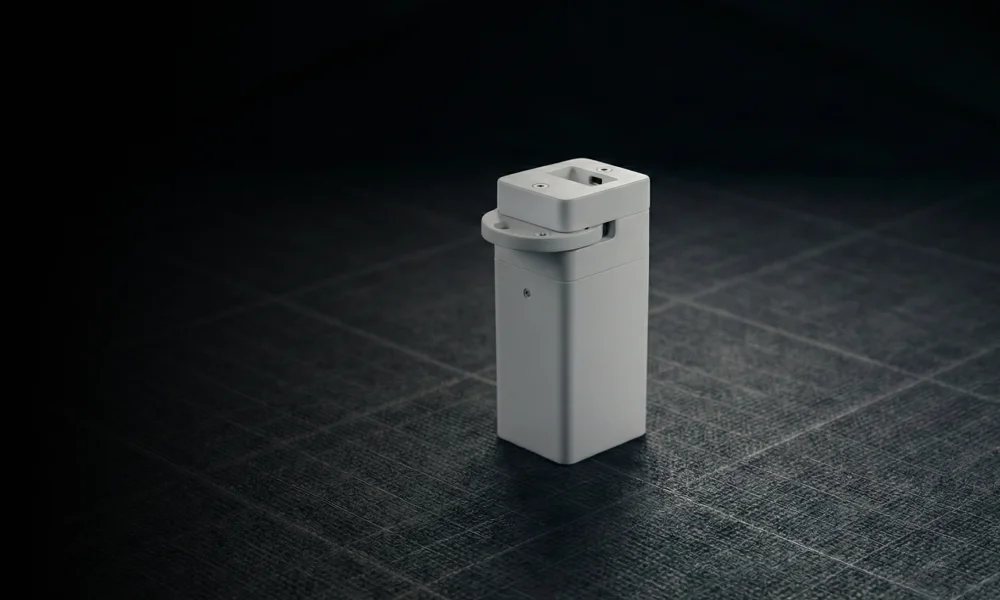
SELF-TRACKING & BEHAVIOUR VISUALIZATION
How might we enable students to self-track and visualise fidgeting behaviour?
This project explores self-tracking, annotation, visualisation, and regulation of fidgeting behaviour during online lectures. Fidget Digits, a self-tracking device, adds 'physical margins' around the structured digital workspace students work in. Secondary interactions such as fidgeting extrinsically enhance a user's state toward the completion of their primary tasks.
FIDGET DIGITS
Project Details
- My Role
- Project Management
- Ideation
- User Research
- Product Design
- Interaction Design
- Tools & Methods
- Adobe XD
- Rhino 3D
- KeyShot
- 3D Printing
- Arduino Nano
- Team
- Dr. Maria Wolters
- Tashfeen Ahmed
- Jiangnan Xu
- Sharon Li
- Peize Li
- Duration
- 3 months
FIDGET DIGITS
Problem
Fidgeting means making small movements, especially of the hands and feet, through nervousness or impatience, usually unconsciously. Research in psychology shows that fidgeting behaviour reflects a person's attentional state. The research also suggests that fidgeting increases over time as the attention level decreases.
During online lectures, it is hard to concentrate due to several reasons. There is a dilemma surrounding the benefits and detrimental impacts of fidgeting. Schools have also banned fidget spinners in the past. Research shows that in some cases, fidgeting can actually be a way of regulating attention, and hence beneficial. However, this is heavily dependent on context.
FIDGET DIGITS
User Research
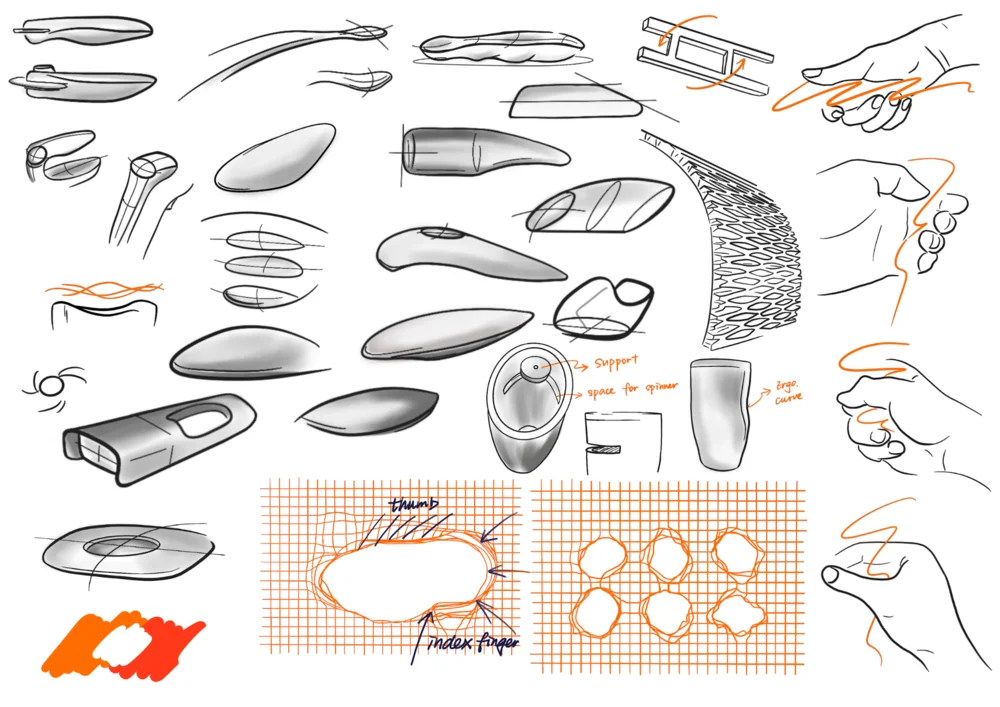
Through semi-structured interviews with students (N=10) from The University of Edinburgh, we found that fidgeting and doodling are common behaviours during online classes, with increased occurrence in longer lectures. Some students actively use doodling as a method of attention regulation. Students prefer a handheld fidgeting tracker rather than a wearable device.
FIDGET DIGITS
Solution
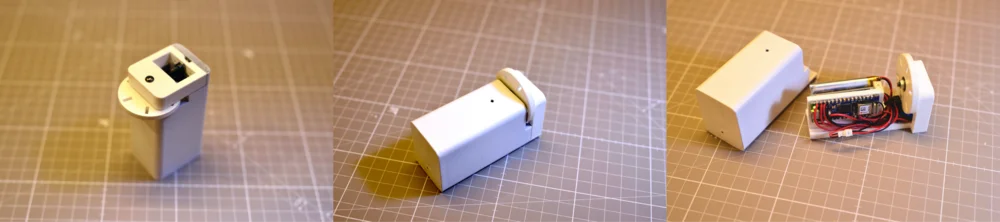
Based on the user research, we sketched some concepts and discussed them with the target audience. Feedback from users was taken at all steps during the design process. The finalised designs were modelled on Rhinoceros 3D software and 3D printed for evaluation.
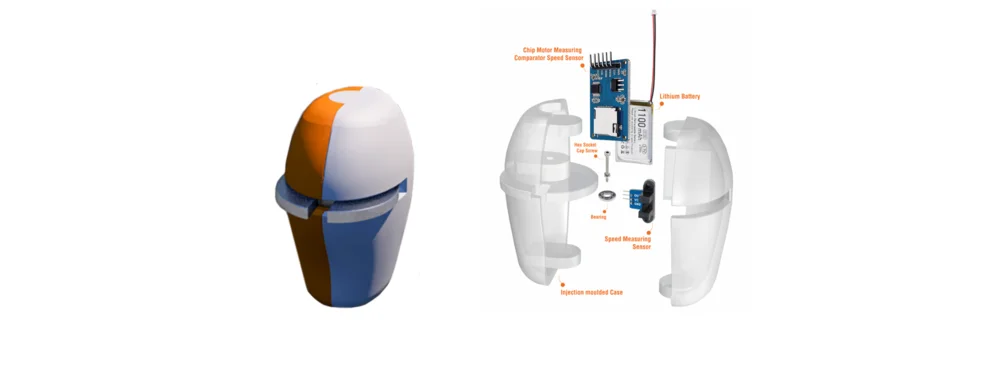
Fidget Digits is equipped with a speed measuring sensor that captures the number of spins i.e. a single spin equals one data reading. The data is recorded with a timestamp so that it can be visualised on a time series. Users can annotate data to make better sense of it. Alternatively, it can be synced with the calendar to auto-annotate timings.
FIDGET DIGITS
Data Visualisation & Annotation
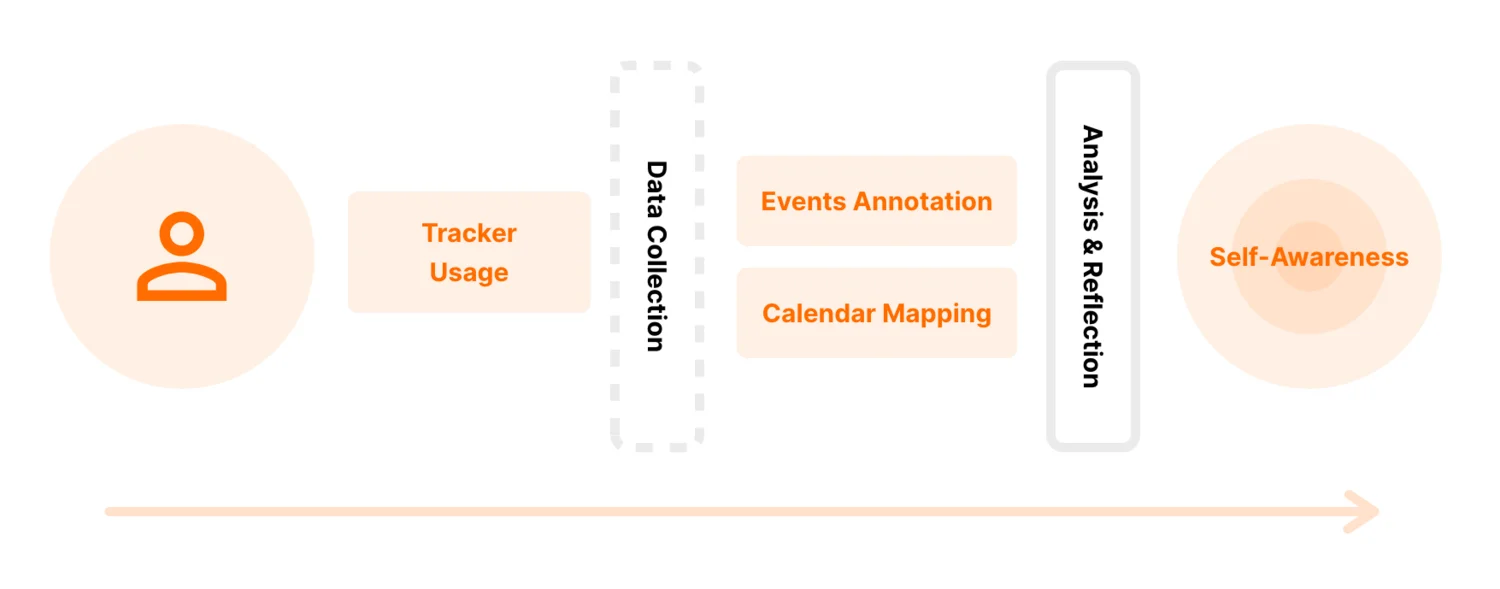
Data from the Fidget Digits device is stored locally on the device on an SD card. It can then be transferred to another device for visualization and annotation. The goal of this project is to not only let users visualize data but also be able to annotate it.
Annotation can happen automatically if the calendar is synced with the applet or users can manually select fidgeting events and annotate them. The data visualisation applet keeps a diary of readings and annotations.
FIDGET DIGITS
Results
Our aim was to design a device that does not distract users but helps them become more self-aware about their fidgeting behaviour. Our initial prototype focused on functionality over ergonomics.
Through user evaluation and feedback, we revised the design to create a more user-friendly and ergonomic device that helps students become more self-aware of their fidgeting behaviour without causing distraction. The device successfully tracks fidgeting patterns and provides meaningful insights through visualization.