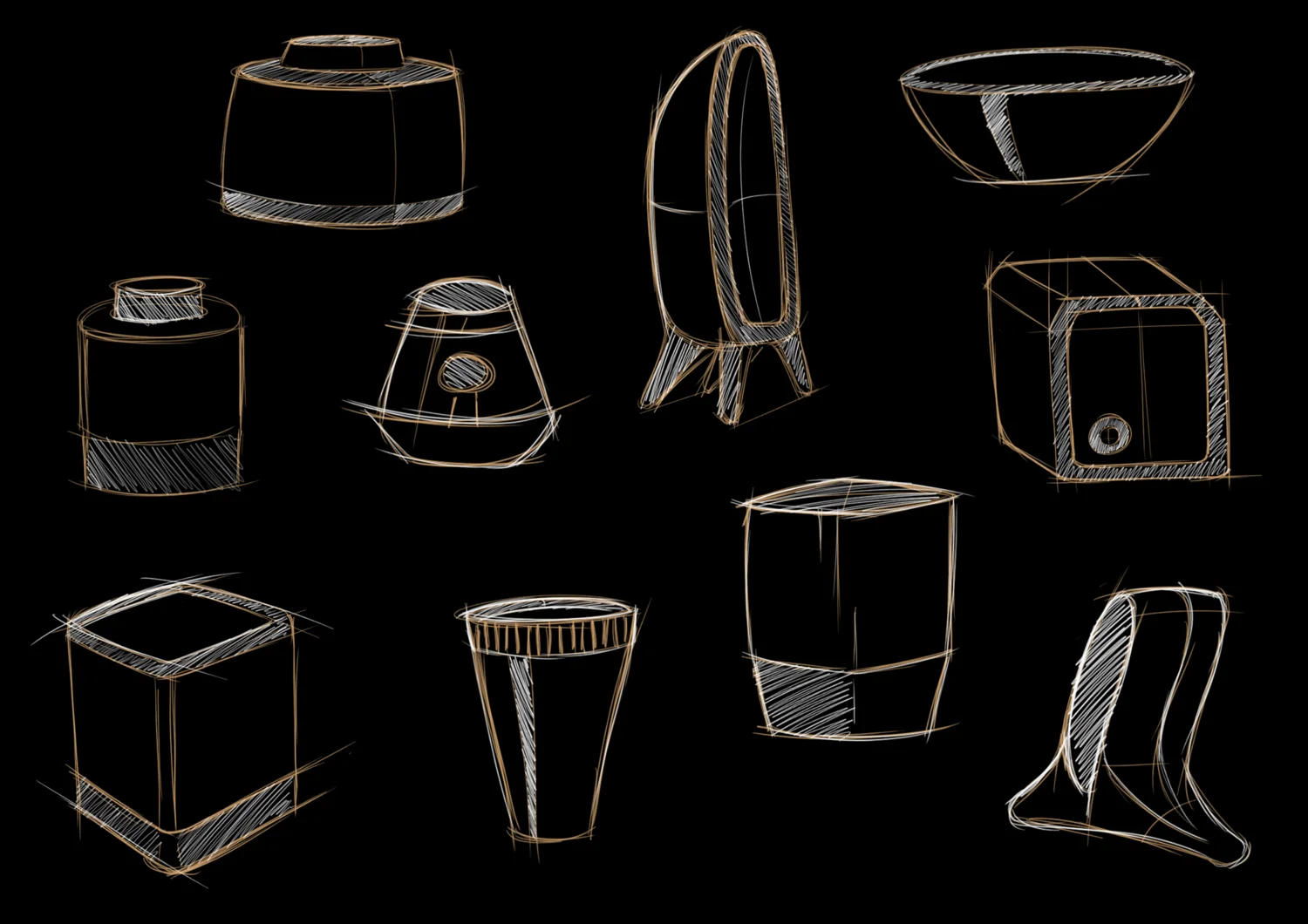
EXPRESSIVE LIGHT LAMP DESIGN
How might we help students maintain physical distancing in shared spaces?
During the COVID-19 pandemic, social distancing emerged as a crucial measure to prevent the spread of the virus. Initially, people were required to quarantine, but as restrictions eased and spaces reopened, maintaining physical distance became the new norm. This project was developed as part of my studies in the Design Informatics programme at the University of Edinburgh to address this challenge.
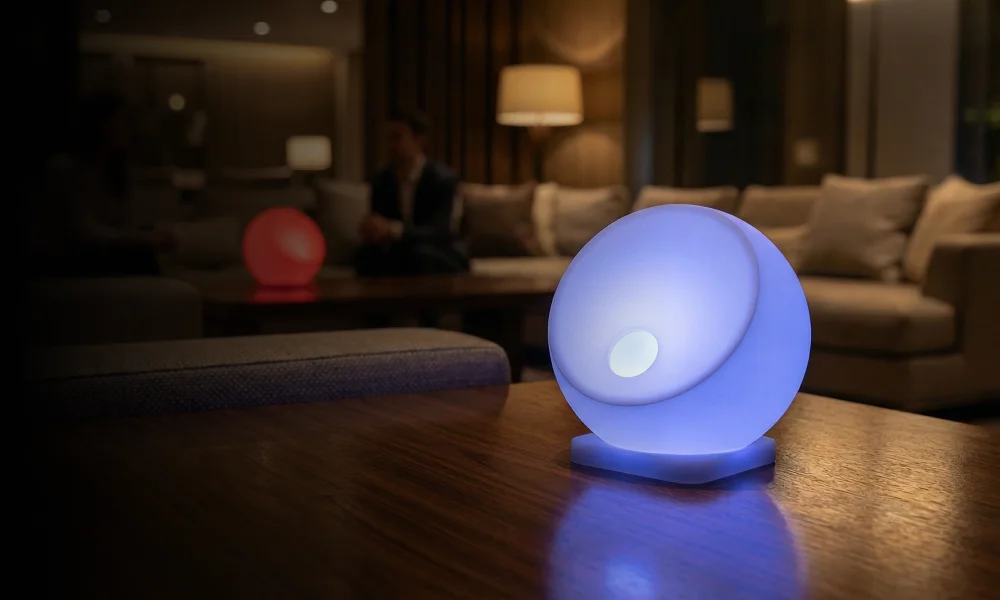
We used expressive lights to convey the message of physical distancing in shared student spaces. The design was non-authoritative, non-invasive, and subtle, making students aware of their physical distance from others.
EXPRESSIVE LIGHT LAMP
Project Details
- My Role
- Researcher
- Designer
- Maker
- Tools & Methods
- Surveys
- Secondary Research
- Product Design
- Adobe XD
- Rhino 3D
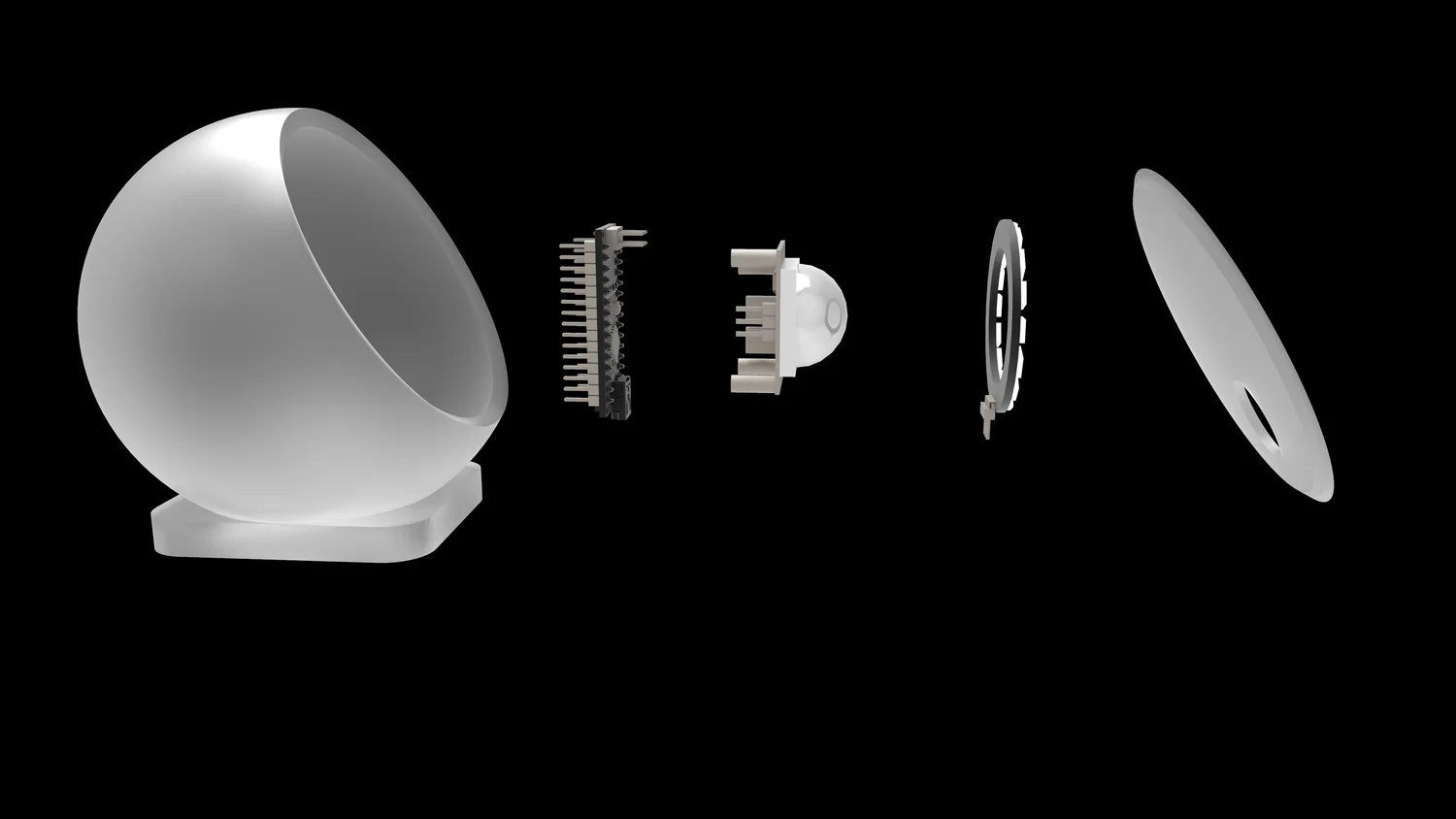
- Arduino Nano
- Video Editing
- Team
- Dr. Bettina Nissen
- Tashfeen Ahmed
- Tamara Lottering
- Chloe Lei
- Duration
- 3 months
EXPRESSIVE LIGHT LAMP
Problem & Solution
Problem The COVID-19 pandemic changed daily life, emphasizing the importance of physical distancing to reduce the spread of viruses. Shared spaces in universities posed challenges as they often promote social closeness.
Solution We designed the expressive light lamp as a subtle and effective physical distancing aid for shared study spaces. Combining interior design aesthetics with sensing technologies, the lamp monitors proximity and conveys feedback through light signals, maintaining comfort without feeling intrusive.

EXPRESSIVE LIGHT LAMP
Results
Usability testing showed the lamp effectively influenced behavior in maintaining distances, but some limitations, like habituation, were observed. Future iterations could focus on improving adaptability to avoid over-familiarity.
The expressive light lamp features subtle color changes to indicate safe or unsafe physical distances, providing real-time feedback through Arduino Nano sensors for precise distance detection. Its non-invasive design blends seamlessly into study spaces, maintaining functionality without resembling surveillance tools.